

Description
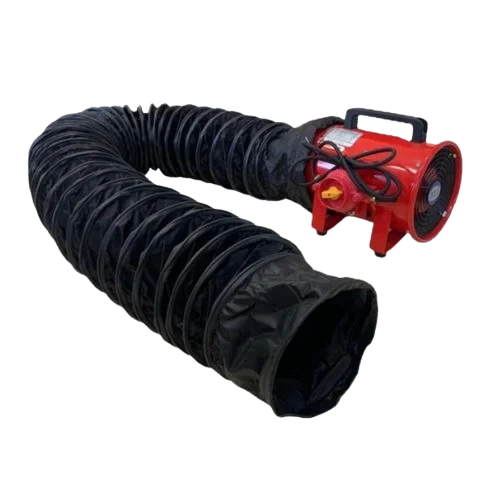
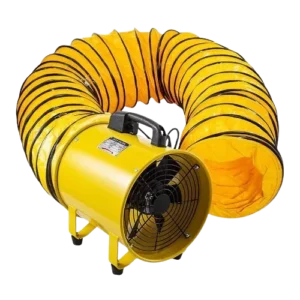
Explosion-Proof Blowers
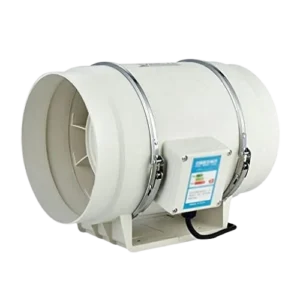
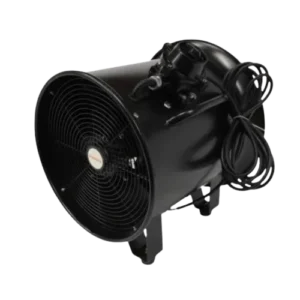
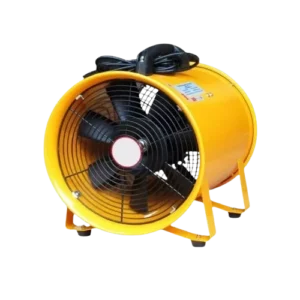
An explosion-proof blower is a type of industrial fan designed to operate safely in environments where there’s a risk of explosion. Unlike a standard blower that could generate a spark from its motor or moving parts, these blowers are constructed to contain any potential sparks or high-temperature surfaces within a sealed enclosure. This prevents the blower from becoming an ignition source for the surrounding hazardous atmosphere.
Key features include:
- Sealed Motor Housing: The motor is enclosed in a robust, sealed housing to prevent sparks from escaping.
- Non-Sparking Materials: The fan blades and housing are often made from spark-resistant materials, like aluminum or brass, to prevent friction-induced sparks.
- Compliance with Standards: These blowers are manufactured to meet strict international safety standards like ATEX (Europe) and IECEx, ensuring they’re safe for classified hazardous locations.
Antistatic Hoses
An antistatic hose, also known as a static dissipative hose, is designed to safely discharge the buildup of static electricity. As air, dust, or other materials move through a hose, they create friction against the hose walls, generating a static charge. In an explosive environment, this static charge can build up and release as a spark, causing an explosion.
Key features include:
- Conductive Material: These hoses are made from materials like a special PVC or polyurethane that have inherent or added conductive properties.
- Grounding Wire: Many antistatic hoses contain a grounding wire or a metallic helix that provides a safe path for the static charge to dissipate.
- Dissipative Properties: The material helps to spread the charge across the hose surface, preventing a high-energy discharge.
Applications and Importance
The combination of an explosion-proof blower and an antistatic hose is essential for workplace safety in a wide range of industries where flammable or combustible materials are present.
Common applications include:
- Chemical and Petrochemical Plants: For ventilating areas with flammable gases and vapors.
- Mining and Tunnels: To remove combustible gases and dust from underground environments.
- Grain Handling and Silos: To prevent dust explosions, as grain dust can be highly combustible.
- Pharmaceuticals: To safely handle and process volatile chemicals.
- Confined Space Ventilation: Providing safe air to workers in tanks, pipelines, and manholes where explosive gases may accumulate.

Reviews
There are no reviews yet.